



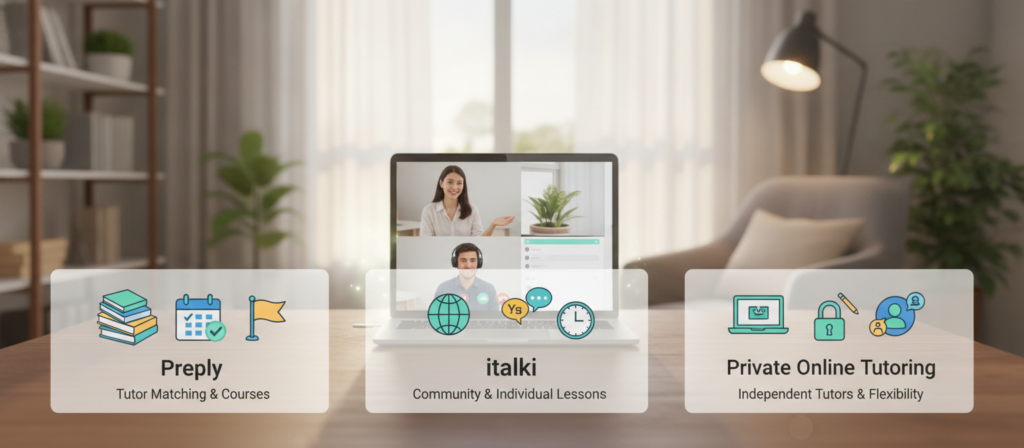
Which path is most likely to help you speak a new language with confidence: a structured online lesson provider, a tutor marketplace, or an independent private instructor?
Many learners rely on online language tutoring to build practical conversation skills. However, choosing a lesson format can be difficult because each model offers a different balance of structure, flexibility and learner protection. This guide compares three common paths side by side.
You’ll see how pricing structures, teacher screening, scheduling flexibility and cancellation policies can differ. Structured online providers generally offer organised teacher-led learning and ongoing support. Tutor marketplaces give learners a broad selection of independent profiles, while direct private online tutoring puts you in contact with an instructor without an intermediary.
Your time and budget matter, so it is worth looking beyond headline prices. By the end of this comparison, you should have a clearer idea of which route suits your goals, schedule and preferred learning style.
Key Takeaways
- Structured online lesson providers are well suited to learners who want guided progress, qualified teachers and clear learning goals.
- Tutor marketplaces offer a broad choice of profiles and teaching styles, but learners may need to compare credentials and experience carefully.
- Private online tutoring can provide a highly personal experience, although you may need to vet the instructor and manage payments and scheduling yourself.
- Lesson prices vary according to the teacher’s qualifications, experience, subject and lesson format.
- Teacher quality and screening processes can affect consistency, safety and the overall learning experience.
- Scheduling flexibility is important, but a regular lesson routine often supports more consistent progress.
- Introductory lessons and clear cancellation terms can help you evaluate a service before making a longer commitment.
1. Understanding Your Language Learning Options
How you learn a language can affect your budget, motivation and confidence. Online learners generally have three teacher-led options: a structured lesson provider, a tutor marketplace or a direct arrangement with an independent teacher.
Structured online lesson providers combine live lessons with organised support and a clearer learning pathway. At Your Native Teacher, learners can work online with qualified teachers and receive personalised guidance based on their goals. Tutor marketplaces focus on offering a large selection of independent profiles, while direct private tutoring requires the learner and teacher to manage the relationship themselves.
None of these models is automatically right for everyone. Your best choice depends on your current level, budget, schedule, learning goals and how much structure or administrative support you need.
2. Comparing Structured Lessons, Tutor Marketplaces and Features
Structured providers and tutor marketplaces both give learners access to live online lessons, but their approaches can differ. A structured provider typically focuses on teacher quality, continuity and guided learning. A marketplace generally prioritises choice, allowing tutors to create profiles and set their own availability or rates.
Before choosing either model, look beyond the number of available tutors. Consider how teachers are selected, whether lessons follow a coherent plan, what support is available and how cancellations or teacher changes are handled.
2.1 Structured Online Lessons with Qualified Teachers
A structured online lesson provider is a strong option for learners seeking accountability and an organised learning experience. Lessons can be adapted to your level while still following clear objectives, making it easier to identify strengths, address weaknesses and review progress over time.
This model can be especially useful for exam preparation, business-language training, grammar development and learners who are unsure what to study next. The provider may also handle scheduling, payments and teacher support, reducing the administrative work for the learner.
An introductory lesson or consultation can help you determine whether the teacher’s approach, lesson format and learning plan are suitable before you commit to regular study.
2.2 Tutor Marketplaces: Broad Choice with More Learner-Led Vetting
Tutor marketplaces connect learners with independent instructors from different countries and professional backgrounds. You may find qualified teachers, conversation partners and subject specialists, with rates and teaching styles varying considerably between profiles.
The broad selection can be useful if you have an unusual schedule or want to compare several teaching approaches. However, low headline prices do not necessarily indicate the level of training, preparation or personalised feedback you will receive.
Before booking, review the tutor’s qualifications, relevant experience, lesson description and cancellation terms. An introductory session can also help you assess whether the tutor understands your goals and can provide an appropriate learning plan.
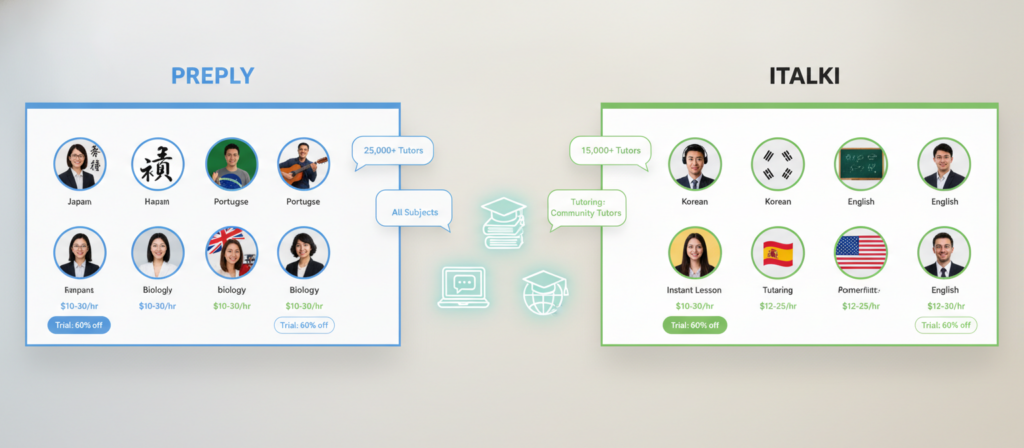
2.3 Side-by-Side Comparison Table
The most suitable option depends on your priorities. The table below highlights typical differences, although individual providers and teachers may operate differently.
| Feature | Structured Online Provider | Tutor Marketplace |
|---|---|---|
| Pricing Structure | Provider-set or package-based pricing with support included | Tutor-set rates that can vary widely |
| Teacher Selection | Provider-defined recruitment and qualification standards | Varies by platform and tutor category |
| Lesson Structure | Personalised lessons within a guided learning plan | Depends largely on the individual tutor |
| Introductory Lessons | May be available, depending on the provider | Availability and terms vary by tutor or platform |
| Learner Support | Central support for lesson or scheduling issues | Platform support may be available, but teaching issues depend on the tutor |
If you value qualified teachers, personalised guidance and a coherent learning plan, a structured provider may be the better fit. If your main priority is browsing a large selection of independent profiles, a marketplace may offer more choice but require more research.
3. Private Online Tutoring: The Independent Alternative
Another option is to hire an independent tutor directly. Private online tutoring can create a personal working relationship without a platform or education provider managing the arrangement. This can appeal to experienced learners who already know what they need and feel confident assessing a teacher’s suitability.
You and the tutor agree on lesson goals, scheduling, payment and learning materials. This can provide considerable flexibility, but it also places more responsibility on both parties.
Key Benefits of Hiring a Private Tutor Directly
A direct arrangement may give you more control over scheduling, lesson content and communication. An experienced teacher can tailor sessions to your needs, with lessons evolving according to your progress and feedback.
It can work particularly well when you already know and trust the teacher. The absence of an intermediary may simplify communication, although it does not guarantee lower prices or better teaching quality.
Potential Drawbacks and Hidden Risks
With an independent arrangement, you are responsible for checking the tutor’s identity, qualifications and experience. You should also agree on payment, cancellations, missed lessons, rescheduling and the handling of personal information before lessons begin.
There may be no separate support team to help if a dispute arises. Scheduling can also become difficult if the tutor has limited availability or stops teaching unexpectedly. Finding and assessing a suitable independent teacher may therefore take additional time.
When Direct Private Tutoring May Be Suitable
Direct private tutoring may suit advanced learners seeking niche expertise or long-term students who already have a trusted teacher. It can also work for learners who are comfortable setting their own objectives and evaluating whether lessons are effective.
Learners who want professional screening, ongoing support and a structured plan may prefer an established online education provider instead. For example, Your Native Teacher offers live online lessons with qualified teachers and personalised guidance, without requiring learners to manage the entire teaching arrangement themselves.
| Factor | Direct Private Tutoring | Provider- or Marketplace-Based Lessons |
|---|---|---|
| Cost Structure | Agreed directly with the teacher | Provider pricing or tutor-set rates |
| Teacher Vetting | Checked by the learner | Screening standards vary by service |
| Payment Protection | Depends on the direct agreement and payment method | May include formal payment and dispute procedures |
| Scheduling System | Arranged directly with the teacher | Usually supported by an online booking system |
| Lesson Personalisation | Depends on the teacher’s expertise and preparation | Can be personalised within the service’s teaching model |
4. Conclusion
Your choice should reflect what you value most. If you want qualified teachers, an organised learning plan and support when your needs change, a structured online provider is likely to be the strongest option. If you prefer to browse a large selection of independent profiles, a tutor marketplace may offer more variety but require careful comparison.
Direct private tutoring can be effective when you already know what a productive lesson should include and are comfortable checking credentials and managing the arrangement. It may be less suitable for beginners who need help identifying the skills they should prioritise.
There is no universal best online tutor for every learner. Relevant teaching experience, communication style, availability and the ability to provide useful feedback are more important than choosing solely by price.
Language-learning apps can supplement lessons by supporting vocabulary review and independent practice, but they do not replace personalised feedback and live interaction with a qualified teacher. Choose a learning format that supports regular speaking practice, review your progress periodically and adjust your plan when necessary.