



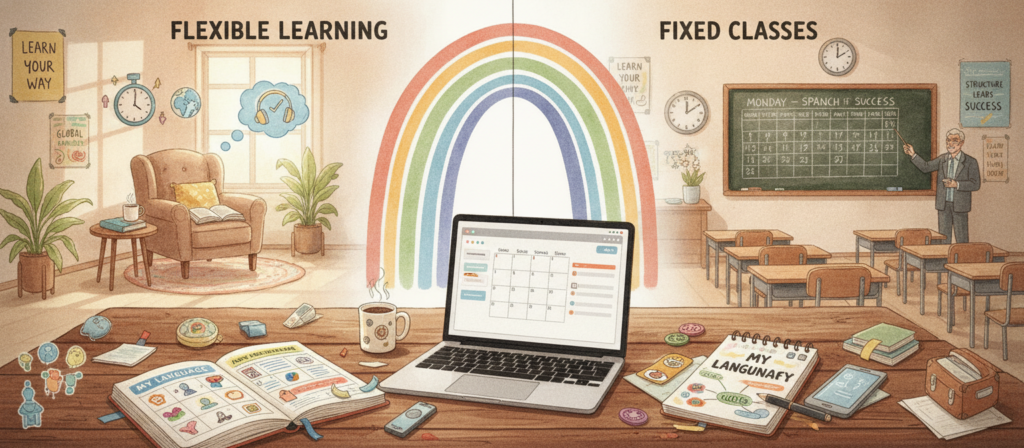
Can you really commit to a class every Tuesday at 6 p.m. and still keep your job, family, and sanity intact?
For many adult learners, that rigid time slot feels impossible. Work deadlines shift without warning. Kids need rides to practice. Unexpected commitments can disrupt even the best-laid plans.
Yet other students thrive on that same structure. A set time on the calendar keeps them accountable. It gives their week a rhythm and encourages them to show up, even on tiring days.
This guide compares flexible lessons with fixed classroom schedules for language learners like you. You will see how each path can shape your progress, budget, and daily routine over time.
The right choice depends on your personality, goals, and how predictable your week actually is. There is no single answer that fits everyone.
Section by section, this article breaks down the factors that matter. By the end, you will have a clearer idea of which path can support meaningful progress instead of leaving you tied to a schedule that does not work.
Key Takeaways
- Fixed classroom times work well for learners who need routine and accountability.
- Flexible lesson schedules let you fit study sessions around work, family, and unpredictable days.
- Your personality and learning preferences should help guide which schedule format you choose.
- Both class formats can support progress when matched to your lifestyle and goals.
- Consider your budget and long-term goals before committing to either option.
- An online lesson schedule can offer more control over timing and lesson frequency than a fixed classroom slot.
1. Understanding the Two Learning Models
Before choosing your learning path, it is important to understand what each option offers. Fixed language classes and flexible private lessons provide two different ways to learn a language.
What Fixed Language Classes Look Like
Fixed language classes follow a traditional setup. You attend at a set weekly time with the same group of people throughout the course.
An instructor guides each session using a set curriculum and a shared pace. Community education programs, language schools, and other classroom-based courses commonly use this model.
What Flexible Language Lessons Look Like
Flexible language lessons give you more control over your schedule. Depending on the provider’s booking and cancellation policies, you can choose available session times and adjust how often you meet each week.
Instead of learning in a group classroom, you may work one-on-one with a qualified teacher online. At Your Native Teacher, for example, learners can take live online lessons and receive personalised guidance based on their goals. This format lets the teacher adapt the pace and content without requiring the learner to keep up with a group.
2. Flexible Language Lessons vs Fixed Classes: Key Differences That Matter
There are four key differences between fixed and flexible language lessons. These differences can affect your journey toward fluency. Time, money, pace, and motivation are all important. Understanding how each format handles them can help you make a more informed decision.
Time Commitment and Availability
Fixed classes require you to follow a schedule. You attend at the same time every week, whether or not that time remains convenient.
This can work well if your schedule is consistent. However, life does not always cooperate.
Flexible lessons, on the other hand, may allow you to choose from a wider range of available times and make changes when unexpected events arise. This can be valuable for people with unpredictable routines.
Cost Structure and Value
The cost of language lessons varies by format, provider, lesson length, and level of personalisation. Fixed group classes may cost less per learner because the teacher’s time is shared among several students.
However, some courses require payment for the full term, even if you miss individual classes. In that situation, repeated absences can reduce the value you receive.
Private flexible lessons may cost more per hour than group classes, but they provide focused attention and lesson content tailored to your needs. Booking, cancellation, and rescheduling terms vary, so review them before committing.

Pace of Learning and Personalisation
Fixed classes generally move at one pace. If you learn more quickly than the group, you may have to wait. If you need more time, you may struggle to keep up.
Flexible private lessons can be tailored to you. Your teacher can adjust the pace, materials, and activities according to your needs.
Perhaps you need to prepare for a trip, relocation, exam, or professional situation. Flexible lessons can focus your study time on the language skills that matter most to your goal.
Consistency and Accountability
Fixed classes provide external accountability. A set schedule and the presence of classmates can help keep you motivated, even on difficult days.
Flexible lessons require you to take more responsibility for booking and attending sessions. Without a rigid timetable, you need a realistic routine and a degree of self-discipline.
However, flexible lessons can still provide structure. Booking recurring sessions with the same teacher, setting short-term goals, and reviewing progress regularly can create accountability while preserving scheduling flexibility.
| Factor | Fixed Classes | Flexible Lessons |
|---|---|---|
| Schedule | Set weekly time slot | Choice of available times, subject to booking policies |
| Cost of Language Lessons | Often lower per learner, with payment commonly required for a course or term | Often higher per hour, with more individual attention |
| Learning Pace | Shared pace for the whole class | Personalised to your needs and goals |
| Accountability | External structure helps keep you on track | Requires self-discipline but can include recurring bookings and progress goals |
3. Which Option Suits Your Lifestyle Best?
Finding the right learning model is not simply about how disciplined you are. It is about matching the format to your life. Your job, family responsibilities, and energy levels all play a role in determining what works best for you.
Best Fit for Busy Professionals and Parents
If your schedule changes frequently, flexible online language lessons may be the more practical option. Work calls can run late, school pickups take up afternoons, and shift work does not always fit with a 6 p.m. class.
For busy professionals learning a language, the ability to study at less conventional times can be valuable. Depending on teacher availability, you might arrange a lesson early in the morning or later in the evening. This flexibility can help you maintain momentum when your schedule is demanding.
Best Fit for Students and Structured Learners
Not everyone needs maximum flexibility. Some adult language learners do better with a set schedule. A fixed syllabus, weekly deadlines, and classmates who expect you to attend can provide useful motivation.
This structure is similar to a university language class. It reduces the need to make frequent scheduling decisions: you follow the plan and continue working through the course.
| Lifestyle Type | Recommended Model | Why It Works | Example Scenario |
|---|---|---|---|
| Working Parent | Flexible Online Lessons | Can adapt to school runs and unpredictable evenings | A lesson arranged for the evening after the children are asleep |
| Corporate Professional | Flexible Online Lessons | Can accommodate meetings and travel, subject to availability | An early session arranged before a business trip |
| University Student | Fixed Class | Matches an existing academic routine and provides peer support | A weekly class that fits between lecture blocks |
| Shift Worker | Flexible Online Lessons | Can accommodate rotating hours more easily | Lesson times selected according to the week’s shift pattern |
Signs You Need More Flexibility in Your Language Journey
Some signs are hard to ignore. Ask yourself whether any of these sound familiar:
- You have repeatedly missed fixed classes because of work or family conflicts.
- You regularly feel stressed when your lesson reminder appears because the time no longer suits you.
- You are paying for sessions that you frequently cannot attend.
If you recognise these patterns, a strict schedule may not be working for you. Choosing a flexible format is not giving up. It is choosing an approach that better reflects your responsibilities.
4. Conclusion
No single teaching model is best for everyone. The right choice depends on your schedule, budget, learning preferences, and how you manage busy periods.
If you have struggled to keep up with fixed classes or felt guilty about missing them, consider whether flexible language lessons would remove some of those obstacles. They can help you fit learning into your life rather than forcing your life around one weekly time slot.
Fixed classes remain a good option for learners who benefit from routine, peer support, and external accountability. For adults with changing schedules, however, flexible live online lessons may be easier to sustain.
Before choosing, think about your habits and what has held you back in the past. Review the provider’s scheduling and cancellation terms, then choose the format that fits your lifestyle and supports consistent practice.