



Can a smartphone app really replace a qualified teacher when you want to learn a new language? This question makes many learners pause before starting.
Choosing the right language learning app or a skilled tutor is important. It can affect how consistently you study, how much useful feedback you receive, and how much you enjoy the process. Learners may need a new language for work, travel, study, or personal growth.
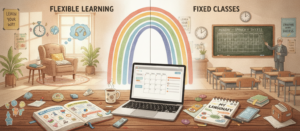
On one side, you have flexible digital exercises. On the other, there is personalised, human-led instruction designed around your needs.
Neither language learning method is best for everyone. Your choice depends on your budget, schedule, learning preferences, and communication goals.
This guide explains both options so that you can decide which approach, or combination of approaches, fits your goals.
Key Takeaways
- A language learning app offers flexible, self-paced practice you can do at almost any time.
- A private tutor provides personalised feedback and can correct mistakes in real time.
- Your learning preferences may determine whether self-paced exercises or live conversation suits you better.
- The costs and level of support differ significantly between apps and private lessons.
- Combining app-based practice with teacher-led lessons can provide a useful balance.
- Your communication goals should guide how you divide your time and budget.
Babbel vs Private Lessons: Two Approaches to Learning a New Language
Choosing how to learn a new language involves balancing convenience with interaction and feedback. Understanding what each approach offers can help you make an informed decision.
Babbel: App-Based Language Learning
Babbel is a self-paced learning app with structured digital lessons. Learners can open the app, select a lesson, and complete exercises when their schedule allows. Subscription features and available languages may vary by plan and location.
This type of app can be useful for learners who want short, regular study sessions. For example, you might practise during a commute, at lunchtime, or before bed without arranging an appointment.
Key Features of Babbel
Babbel is primarily designed for independent practice rather than personalised, live instruction. Its app-based features include:
- Speech-recognition exercises that allow learners to practise pronunciation, although automated feedback is more limited than feedback from a teacher.
- Structured course paths that introduce vocabulary and grammar progressively.
- Interactive exercises, such as matching activities and quizzes.
- Spaced review activities designed to reinforce previously studied material.
- Offline access for eligible lessons downloaded in advance.
Pros and Cons of Babbel
Babbel may suit learners who prioritise independent, flexible practice. However, it should generally be viewed as a supplementary study tool rather than a replacement for live speaking practice and personalised feedback.
| Pros | Cons |
|---|---|
| Usually costs less than regular private instruction | The standard app experience does not provide personalised conversation with your own teacher |
| Allows learners to study at their own pace | Content is not fully tailored to individual professional, academic, or travel goals |
| Provides a consistent structure for independent practice | Automated feedback may not explain complex grammar or pronunciation issues |
| Useful for short vocabulary and grammar review sessions | Independent learners may find it harder to maintain accountability |
Private Language Lessons: Personalised, Human-Led Instruction
Private lessons take a different approach. Instead of following only a fixed app pathway, you work with a teacher who can adapt lessons to your level and objectives. Whether you choose in-person language classes or an online language tutor, the focus is on direct, personalised language instruction.
This method uses a teacher’s professional judgement rather than relying solely on automated feedback. A qualified teacher can correct mistakes in real time, explain why something is wrong, and adjust activities as you progress.

Private lessons offer a level of customisation that self-paced learning cannot fully match. Common features include:
- Customised lesson plans based on goals such as travel, exams, or business communication.
- Real-time conversational practice with immediate, relevant correction.
- Flexible formats, including 1-on-1 language lessons online or in person.
- Cultural and linguistic context explained by a qualified, fluent teacher.
- Progress tracking based on individual performance rather than only a fixed curriculum.
At Your Native Teacher, learners can take live online lessons with qualified teachers and receive guidance based on their level, priorities, and preferred pace.
Pros and Cons of Private Lessons
Private instruction offers depth and accountability, but it also involves practical trade-offs.
| Pros | Cons |
|---|---|
| Highly personalised language instruction tailored to your level and goals | Usually costs more than using a self-study app alone |
| Immediate feedback on pronunciation, vocabulary, and grammar | Requires scheduling lessons at mutually available times |
| Regular accountability and support | May offer fewer game-like activities for casual practice |
| Opportunities for spontaneous conversation and cultural discussion | The learning experience depends on the teacher’s qualifications, approach, and suitability for the learner |
Comparing Babbel and Private Lessons Across Key Factors
Choosing between these approaches is not only about advertised features. It is also about which method fits your schedule, supports your goals, and helps you practise consistently.
Here is a comparison of cost, flexibility, learning outcomes, and support. These factors can help you decide where to invest your time and learning budget.
Cost and Value for Money
Babbel uses a subscription model, and its prices may differ according to the subscription length, selected product, location, and current offer. The subscription generally provides access to self-paced lessons and practice activities covered by the chosen plan.
Private-lesson prices vary according to the teacher’s qualifications, lesson length, language, location, and whether lessons are purchased individually or as a package. They require a larger investment than most self-study apps because you are paying for a teacher’s time, preparation, and personalised feedback.
| Cost Factor | Babbel | Private Tutor |
|---|---|---|
| Payment Model | Subscription-based | Per lesson or lesson package |
| Access | Self-paced access under the selected plan | Scheduled time with a teacher |
| Value Provided | Structured independent exercises and review | Live instruction, individual feedback, and adapted lesson content |
If keeping costs low is the main priority, a self-study app may provide useful practice. Private lessons cost more but provide direct instruction and feedback that an app cannot fully reproduce. The better value therefore depends on whether you mainly need independent review or personalised help with communication and specific goals.
Schedule and Flexibility
Babbel allows learners to study when convenient. You can complete a short activity in the morning or evening and return later without coordinating with another person’s schedule.
Private lessons require more planning. You must book sessions at times that work for both you and your teacher. Cancellation and rescheduling terms vary by provider, so learners should check them before booking.
The main scheduling differences include:
- Babbel: Self-paced activities are generally accessible at any time under an active plan.
- Babbel: Study sessions can be short or extended according to your availability.
- Private lessons: Sessions take place at scheduled times agreed with the teacher.
- Private lessons: Regular appointments provide built-in accountability and live interaction.
If your schedule changes frequently, an app can make independent practice easier. If you benefit from routine and accountability, a regular session with a teacher may help you stay on track. Online private lessons can also reduce travel time and provide more scheduling options than in-person lessons.
Fluency and Learning Outcomes
Babbel and private teachers support different aspects of language fluency. App exercises can help learners review vocabulary, grammar, and common sentence patterns through repetition.
However, spontaneous conversations require you to understand another person, choose appropriate words, respond naturally, and repair misunderstandings in real time. A teacher can correct your pronunciation, adapt questions to your ability, and help you express ideas without depending on word-for-word translation.
Regular live conversation can provide practice that is difficult to reproduce through self-study alone. Private lessons expose learners to spontaneous dialogue and allow a teacher to explain linguistic or cultural nuances when they arise. Progress still depends on factors such as lesson frequency, independent practice, motivation, and starting level.
An app can therefore be useful for reinforcing foundational knowledge, but learners who want to communicate confidently will usually also need meaningful speaking and listening practice.
Personalisation and Support
Babbel follows a structured course pathway and uses learner activity to support review. Although this can make independent study more relevant, the core content is created for a broad audience rather than for one learner’s specific situation.
Private teachers can tailor lessons to your interests, profession, travel plans, exam requirements, or recurring difficulties. For example, a teacher might focus on presentation language for work, listening skills for travel, or a grammar pattern that repeatedly causes confusion.
Teachers can also respond to hesitation, frustration, or misunderstanding during a lesson. They can change the explanation, provide another example, or slow down when necessary. This type of responsive support is one of the clearest differences between teacher-led learning and app-based practice.
Conclusion
Choosing between Babbel and private lessons depends on your budget, schedule, learning preferences, and goals. There is no single best way to learn a language for every learner.
Babbel can serve as a convenient supplementary tool for independent vocabulary, grammar, and review activities. It may suit learners who want short, self-paced practice sessions, but it does not provide the same level of live interaction or individual guidance as a dedicated teacher.
Private lessons are more suitable when you need real-time speaking practice, detailed corrections, accountability, or content tailored to work, travel, study, or exam goals. They can also help identify mistakes that you may not notice while studying alone.
You do not necessarily have to choose only one method. A practical approach is to use app-based exercises for independent review and work with a qualified teacher for conversation, explanation, and personalised feedback. Your Native Teacher offers live online lessons for learners who want structured support from a real teacher.
Whatever approach you choose, focus on regular, purposeful practice. Consistency matters, but the quality of your practice and feedback also influences your progress.